
Hollywood's Talent Assembly Line
Once Upon a Time in HollywoodThis thread traces the systems by which television programs create new stars, typecast older ones, and turn set etiquette into a measure of professional respect.
increasing Bearing strength in each event
 decreasing
Bearing strength in each eventdecreasingThe Series Star's Ascent

The Series Star's Ascent
A television identity
Rick's success on Bounty Law establishes him as a recognizable lead and brings the resources to buy a home in the Hollywood Hills. The series makes his career visible and stable.
A system of replacement
Once the program ends, networks can use him as a familiar opponent for newer stars. Television success creates a name, but it does not guarantee control over what that name will mean next.
A Newcomer's Showcase
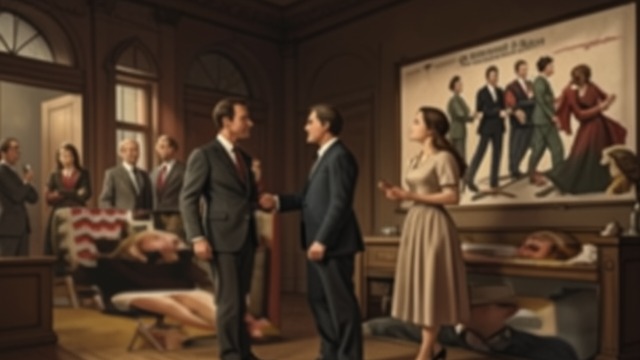
A Newcomer's Showcase
A deliberate casting strategy
Networks use established performers as villains opposite younger actors, allowing the newcomer to win a visible contest. Rick recognizes that this pattern has shaped several of his recent appearances.
Star-making at another's expense
The arrangement helps introduce the next generation but can diminish the older performer. It makes casting a system of managed status, not simply a judgment of individual talent.
The Guest-Star Greeting
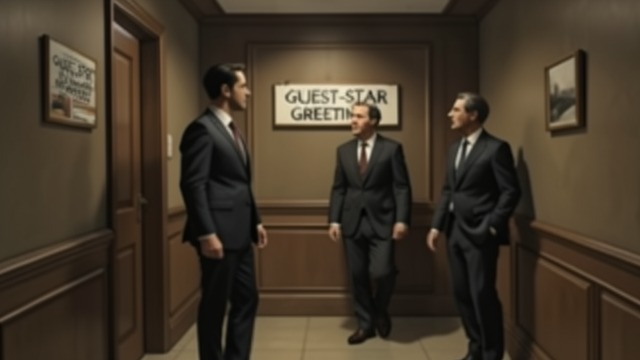
The Guest-Star Greeting
An unwritten courtesy
Rick expects James Stacy, the series lead, to welcome him to the show. On earlier jobs, established leads have greeted him before filming begins.
A small act of status
The delay feels to Rick like public disrespect, even though Stacy is new to leading a series. The moment shows how professional etiquette can express hierarchy more clearly than formal titles do.
The Pilot as a Competition

The Pilot as a Competition
A director's design
Sam Wanamaker encourages Rick to provoke James Stacy so their scenes carry a contest for power. He sees the conflict between guest villain and series lead as a creative advantage.
Cooperation inside rivalry
Rick and Stacy are pushed to compete while still making the pilot work. The production turns an actor's status anxiety into dramatic material that can serve both performances.
A Career Built by Networks

A Career Built by Networks
A path through repeated work
James Stacy explains how directors repeatedly cast actors they trust, giving them visibility with casting staff and network executives. A successful guest appearance can lead to a series.
Luck and labor together
Rick recognizes the pattern because a guest role helped him obtain Bounty Law. His warning to Stacy is not that success is undeserved, but that a fortunate opening should be appreciated while it lasts.
During Rick's Bounty Law success
By the late 1960s, in network guest-star casting
During Rick's first day on Lancer
February 8, 1969, on the Lancer set
During the evening at the Drinker’s Hall of Fame
